Quick answer: A blazer should sit cleanly across the shoulders, follow the neck without a gap, button without pulling, and let your arms move without the whole jacket lifting. Sleeve and waist adjustments are usually manageable; shoulders, armholes, and overall length are expensive or impractical to rebuild. Buy the hard-to-alter areas correctly first, then tailor the details.
This is an editorial fit guide, not a claim that every blazer must follow one silhouette. Oversized, cropped, boxy, and sharply tailored jackets use different proportions. The checks below help you tell intentional shape from poor fit.
The five-minute fitting-room test
- Wear the top or knit you expect beneath the blazer, not a thin fitting-room camisole if you plan to layer.
- Let the jacket hang open and check the shoulder line, collar, and front balance.
- Button the main button and look for strain lines, gaping, or fabric collapsing around the chest.
- Reach forward, sit, hug yourself, and lift each arm. Tailoring should feel shaped, not restrictive.
- Photograph the front, side, and back at waist height. Mirrors hide twisting that a straight photo reveals.
Judge fit before styling. Rolled sleeves, pushed-up cuffs, and an open front can make a wrong size look convincing for three minutes. You want the underlying jacket to work even when worn plainly.
Shoulders: the first deal-breaker
The shoulder seam on a conventional blazer should end close to your natural shoulder point. If it stops well inside, the sleeve head may pull and the upper back can feel tight. If it extends past the shoulder without being designed as a dropped shoulder, the sleeve may collapse or form a dent.
Light padding should lie flat rather than forming a ridge. Check both sides because posture is rarely perfectly symmetrical. A tailor can make small corrections, but changing shoulder width requires rebuilding the jacket. If the shoulders are clearly wrong, try another size or cut.
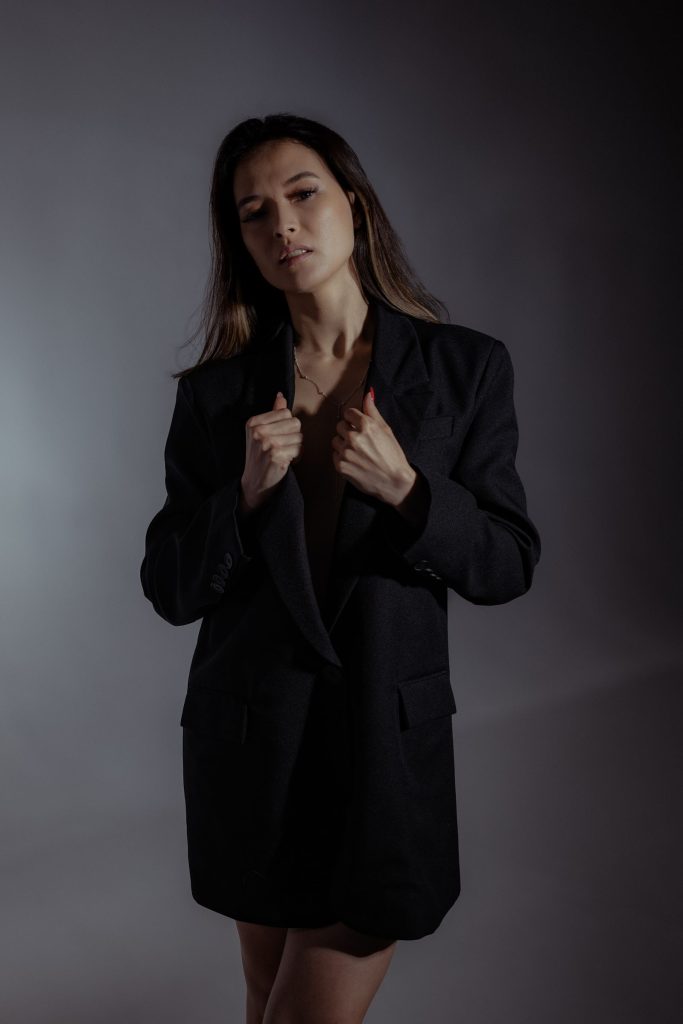
An oversized blazer is different: extra width is deliberate, yet the line should still look controlled. The sleeve must hang rather than twist, the collar should stay near the neck, and the jacket should not slide backward as you walk.
Collar and upper back
The collar should follow the back of your neck. A visible gap can come from posture, shoulder slope, or a jacket cut that does not match your frame. A horizontal roll beneath the collar can signal excess length or fabric across the upper back. Vertical pulling from the armholes can mean the back is too narrow.
Turn sideways and check balance. If the front hem kicks sharply forward or the back rides up, the blazer may be compensating for bust, shoulder, or posture. Buttoning it tighter will not fix the pattern.
Chest and button stance
Button the blazer at its intended closure point. The lapels should lie relatively flat and the front should meet without an obvious X-shaped pull from the button. A slight curve through the waist is normal in a fitted jacket; radiating strain lines are not.
For a fuller bust, sizing up may fix the front but create too much fabric at the waist and back. Look for cuts with darts, princess seams, stretch, or brands that offer curvier proportions. Tailoring the waist from a well-fitting chest is usually easier than creating missing room at the front.
Sleeve length and arm movement
Classic blazer sleeves commonly finish around the wrist bone, allowing a shirt cuff to show if desired. Fashion sleeves can be bracelet-length, extra-long, split, or designed to scrunch. The key is that the end point looks deliberate and works with your wardrobe.
Check where the sleeve buttons and vents sit before planning an alteration. Shortening from the cuff may disturb working buttonholes or trim; shortening from the shoulder costs more. If the sleeve twists, changing length will not correct the sleeve pitch.
Reach for an imaginary steering wheel. Some resistance is normal in tailored woven fabric, but the jacket should not drag the collar away from your neck or cut into the front of the armhole. Very low armholes can paradoxically reduce movement because every arm motion pulls more of the body upward.
Waist, vents, and hem
A shaped blazer should skim the torso rather than cling. Side seams should hang vertically, and rear vents should stay closed while standing. Vents that spread can mean the hip area is too tight or the jacket is catching on the seat.
Length changes the whole proportion. Hip-length blazers feel traditional and balance trousers; longer styles create a strong vertical line and work well over slim or straight bottoms; cropped jackets emphasize the waist and suit higher rises. Check where the hem lands relative to pockets, buttons, and vents. Shortening a jacket can destroy those relationships, which is why choosing the right original length matters.
Fit priorities by blazer style
| Style | What should look intentional | Warning sign |
|---|---|---|
| Single-breasted tailored | Clean shoulder, flat lapel, gentle waist shape | X-pulling at button or collar gap |
| Double-breasted | Fronts overlap smoothly and hang straight | Lower front kicks open or buttons strain |
| Oversized | Controlled volume, straight sleeve hang, stable collar | Jacket slides, twists, or swallows the hands unintentionally |
| Cropped | Hem works with natural waist and trouser rise | Back rides up or hem cuts at the widest torso point |
| Unstructured knit | Soft drape and easy movement | Edges roll, pockets sag, or fabric clings |
Alterations that are usually worth considering
- Sleeve length: often straightforward when cuff details allow it.
- Waist suppression: useful when shoulders and chest fit but the body is too boxy.
- Center or side seams: can refine shape within the existing seam allowance.
- Button placement: a small move may improve closure, though it cannot rescue a jacket that is several sizes wrong.
- Minor hem or vent repair: sensible for quality garments when proportions remain intact.
Shoulder width, armhole position, sleeve pitch, and substantial length changes are more complicated. Ask for a price before buying a “bargain” that depends on major reconstruction.
Fabric changes how fit feels
Dense wool tailoring holds a crisp line but may reveal every tension point. Linen relaxes and wrinkles, so a slightly easier shape often looks more natural. Ponte and other stable knits allow movement but can cling when cut too close. Polyester blends vary widely; judge recovery, shine, breathability, and whether seams press cleanly.
Read the care label before purchase. Woolmark advises following the garment’s specific care claim; woven wool garments are generally best stored on shaped or padded hangers, and pressing should use appropriate steam and heat only when the label allows it. Maintenance cost belongs in the fit decision because a blazer that is difficult to care for may rarely leave the closet.
How to style the fit you chose
A fitted blazer creates contrast with relaxed jeans, wide-leg trousers, or a slip skirt. An oversized blazer works best when at least one other proportion is defined—a visible waist, a shorter inner layer, a clean trouser line, or a deliberate long-over-long silhouette. Before buying, build three outfits using clothes you already own. If the jacket works only with one imaginary future wardrobe, it is not yet a practical purchase.
For more lower-half proportion checks, see our guide to choosing jeans by rise, leg shape, inseam, and fabric.
Frequently asked questions
Should a blazer close comfortably?
Yes, if it is designed with a functioning front closure. Even when you usually wear it open, the button test reveals whether the chest and body have enough room.
How much shirt cuff should show?
That is a styling preference, not a universal rule. Start with the sleeve near the wrist bone, then adjust for your shirts, jewelry, and desired silhouette.
Should I size up for an oversized look?
Prefer a blazer patterned to be oversized. Simply sizing up can make the collar, armholes, pockets, and sleeve pitch sit incorrectly.
Can a tailor fix shoulder dents?
Sometimes a small padding or sleeve-head adjustment helps, but a major shoulder mismatch is costly. Try a different cut first.
Bottom line
Buy the shoulder, collar, armhole, and jacket length correctly. Then refine sleeves and waist if the garment is worth tailoring. A blazer should support the silhouette you chose without twisting, pulling, or making normal movement feel like a special occasion.